Go faster, get hurt less – A strength-training workout just for runners
We’ve all heard the same advice: runners can reap big benefits from strength training. But adding traditional gym standbys like bench presses and biceps curls won’t do you much good when you hit the road.
Build a Better Body, Adam Campbell, C.S.C.S. Runner’s World Magazine has some great advice for runners wanting to add to their weekly mileage routine.
“Strength training is a smart supplement to a runner’s roadwork because it strengthens muscles and joints, which can improve race times and decrease injury risk. ‘Running faster is easier if your whole body is working with you,’ says Jim Fischer, head coach of men’s cross-country and track at the University of Delaware. ‘A runner with strong legs but weak arm muscles and weak core muscles will always be slower than a runner with total-body fitness.’
The trouble is when runners adopt a strength-training program, they tend to do the standard gym-rat routine–that is, bench presses, biceps curls, and leg extensions. While these moves might make you look good, they’re virtually useless for making you a better runner. Think about it: How does pushing a weight away from your chest help you run a faster 10-K? It doesn’t. In fact, lifting weights the way everyone else does may even increase your injury risk, because typical workouts often lead to strength imbalances between muscle groups and around joints.”
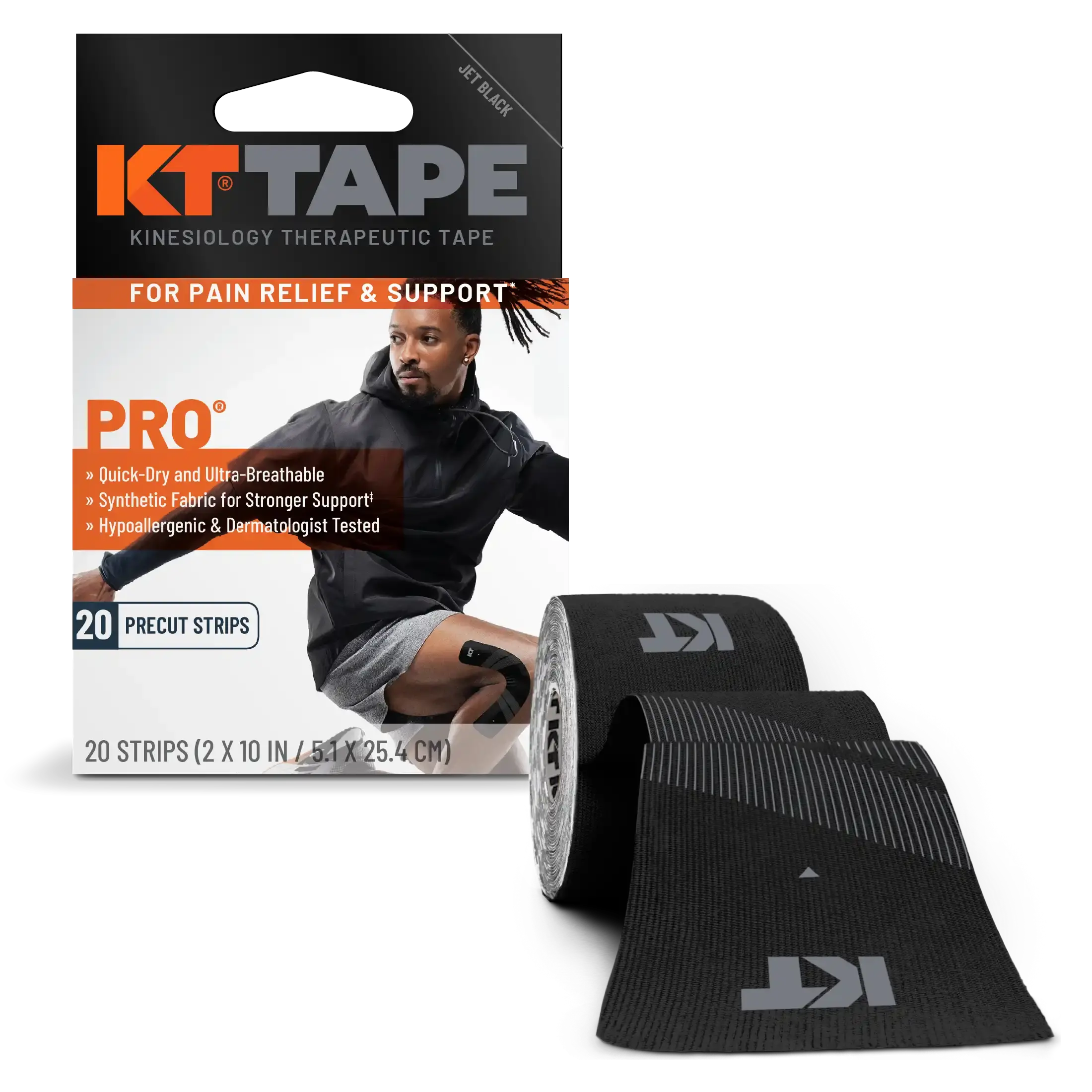
Instead, try this runner-specific training plan from Runner’s World that targets the muscle groups that give runners the biggest performance boost, while strengthening the joints and muscles most prone to running injuries. It’s a quick workout–just one hour total per week–that won’t cut into your mileage. In fact, it may help you run farther and faster than ever before. One more thing to add to your arsenal as you prep for future races, runs or changes in your workout regime: Don’t forget KT Tape whenever you have muscle tension, strain a muscle or need some extra support on the joints.
Filed under: Uncategorized | December 24, 2009| Instructions | Instructions | Instructions | Instructions | Instructions | Instructions |
| IT Band Hip Calf Shin Splints Posterior Shin Splints Quad Groin Hip Flexor Hamstrings |
Gluteus Outer Knee Inner Knee Full Knee Support Bicep Osgood Schlatter Back of Knee Tricep |
Achilles Tendonitis Ankle Stability Plantar Fasciitis Peroneal Tendonitis Ball of Foot Top of Foot Heel Bunion |
Turf Toe SI Joint Low Back Middle Back Ribs Spine Abdominals Neck and Shoulder |
General Shoulder Rotator Cuff AC Joint Shoulder Stability Wrist General Elbow Tennis Elbow Golfers Elbow |
Finger Jam Thumb |
2011 - LUMOS INC. ALL RIGHTS RESERVED. SITE BY MakeItYourWeb
Information on this site is provided for informational purposes only. It is not meant to substitute for the advice provided by a physician or medical professional. If itchiness, irritation, redness, numbness, tingling or new pain appears after applying the tape, remove immediately. Do not use KT Tape if you have been diagnosed with cancer as it may interfere with treatment and disease management strategies employed by your medical professionals. Do not use KT Tape on abdominal applications if pregnant.
You should not use the information contained herein for diagnosing or treating a health problem, injury or disease. You should carefully read all product packaging. If you have or suspect that you have a medical problem, promptly contact your health care provider. Customer reviews and testimonials are provided for informational purposes only. Customer reviews reflect the individual reviewers results and experiences only and are not verified or endorsed by Lumos, Inc. Actual results may vary among users. Please see our Terms of Service Agreement and Privacy Policy.