Running barefoot isn’t just for toddlers and summers spent in the backyard anymore — the long-held tradition of running with no shoes is making a comeback.
This minimalist running technique has recently garnered a great deal of press with the creation of a new shoe for barefoot runners… confused? Don’t be. The funky-looking Vibram Five Finger Shoe provides all the health benefits of running and walking barefoot, without the actual physical risks of going barefoot in a modern environment.
An article Runner’s World published back in 2004 took a look at famous athletes with a history of running barefoot. The article points out that in 1960, Ethiopia’s Abebe Bikila, arguably the best marathoner of all time, won his first consecutive gold medal and a World Reocrd sans shoes. And from 1955-1967, England Bruce Tulloh was setting many European records — always in bare feet.
Charlie “Doc” Robbins, the winner of two USA National Marathon Championships in the late 1940s, completed 50 straight Thanksgiving Day Road Races in Manchester, Connecticut, before calling it quits two years ago. Most Thanksgivings, Robbins went shoeless, though he would resort to a pair of socks if the temperature dipped below 20 degrees, says the Runners World article.
Here are 5 tips from barefootrunner.com to get you ‘barefooting’ safely in no-time:
1) Go barefoot whenever you can. At home, in the garden, in the office (if you can), playing with the kids, taking the pooch for his daily walk. The more your feet rediscover what they’re capable of, the better your feet will feet and so will your soul. Take a look at our minimal shoes reviews to find a pair best suited for your lifestyle.
2) Stop and think, “do I really need those stinkin’ shoes to go?” Sure, certain social or public situations require them, as do certain environmental conditions. Just take 5 seconds and consider if you can manage without shoes, if you can, go for it!
3) Start slow, but start. If you’re a runner you have a great opportunity to run lighter, faster, injury-free and even discover a new running outlook. But don’t ditch those sneaks and go unshod without a plan. Well, you can but your calves will hurt, the feet will tingle, and you may be sore in where you’ve never been sore before. When running in shoes (Barefoot 101) the muscles in your feet have been asleep for a very long time. Be patient as they strengthen over time. For the average runner that means 5-10mins of barefoot running on pavement per run for the first little while.
4) Let go of the stigma. Isn’t it ironic how ‘going barefoot’ has negative social stereotypes; while gymnasts, dancers, martial artists and other pro’s depend on their naked feet. Why the taboo of being naked from the ankle down? So the next time you feel uncertain of going barefoot, just remember that you’re doing the right thing for your body. And if someone asks, just say your feet need a workout.
5) Listen to your feet. No different than those aches your body may feel after a killer gym session, long training run, hardcore trail ride, or showing off your skills on the ski hill. As you introduce barefoot running or walking into your training, you’ll notice that shorter than usual runs will cause muscle and arch tenderness. Don’t plan on that Sunday morning 15 miler training dash for at least 3-4 weeks. Don’t force it. You’re awakening, straining and training muscles that have been asleep for a long time. At the same time, those ‘comfy’ shoes have thinned your soles and strengthening of them will take time, again, patience.
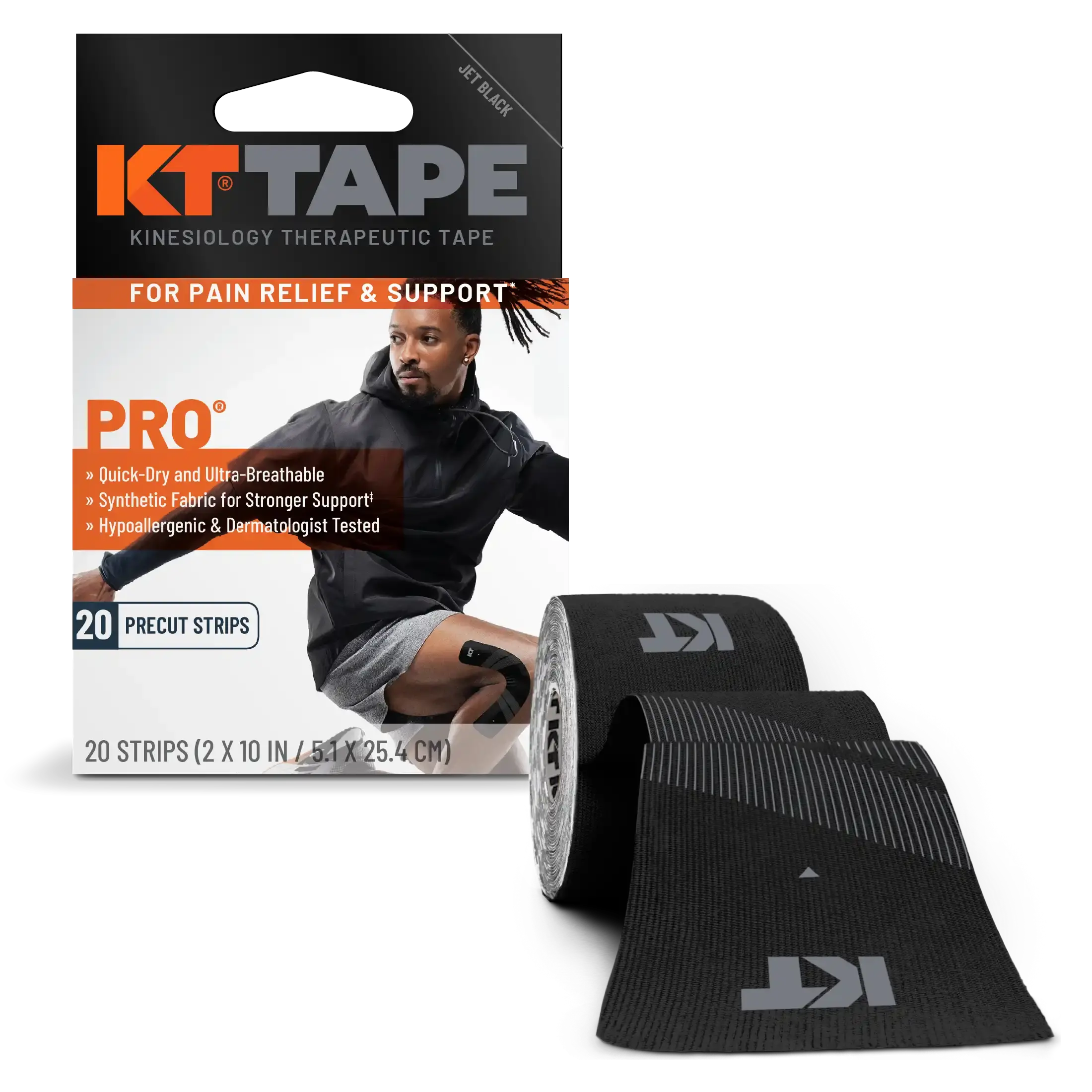
Here at KT Tape, several of us have enjoyed going barefoot more often during short runs. Don’t forget, if you choose to pick up barefoot running, don’t forget to keep using KT Tape on any sore muscles or joints…and check out taping techniques for all kinds of running here: taping applications
Filed under: Aches Pains Injuries, Achilles Tendon pain, Calf strain, Hamstring strain, Knee Pain, Plantar pain, Runner's Knee, Uncategorized | March 31, 2010| Instructions | Instructions | Instructions | Instructions | Instructions | Instructions |
| IT Band Hip Calf Shin Splints Posterior Shin Splints Quad Groin Hip Flexor Hamstrings |
Gluteus Outer Knee Inner Knee Full Knee Support Bicep Osgood Schlatter Back of Knee Tricep |
Achilles Tendonitis Ankle Stability Plantar Fasciitis Peroneal Tendonitis Ball of Foot Top of Foot Heel Bunion |
Turf Toe SI Joint Low Back Middle Back Ribs Spine Abdominals Neck and Shoulder |
General Shoulder Rotator Cuff AC Joint Shoulder Stability Wrist General Elbow Tennis Elbow Golfers Elbow |
Finger Jam Thumb |
2011 - LUMOS INC. ALL RIGHTS RESERVED. SITE BY MakeItYourWeb
Information on this site is provided for informational purposes only. It is not meant to substitute for the advice provided by a physician or medical professional. If itchiness, irritation, redness, numbness, tingling or new pain appears after applying the tape, remove immediately. Do not use KT Tape if you have been diagnosed with cancer as it may interfere with treatment and disease management strategies employed by your medical professionals. Do not use KT Tape on abdominal applications if pregnant.
You should not use the information contained herein for diagnosing or treating a health problem, injury or disease. You should carefully read all product packaging. If you have or suspect that you have a medical problem, promptly contact your health care provider. Customer reviews and testimonials are provided for informational purposes only. Customer reviews reflect the individual reviewers results and experiences only and are not verified or endorsed by Lumos, Inc. Actual results may vary among users. Please see our Terms of Service Agreement and Privacy Policy.