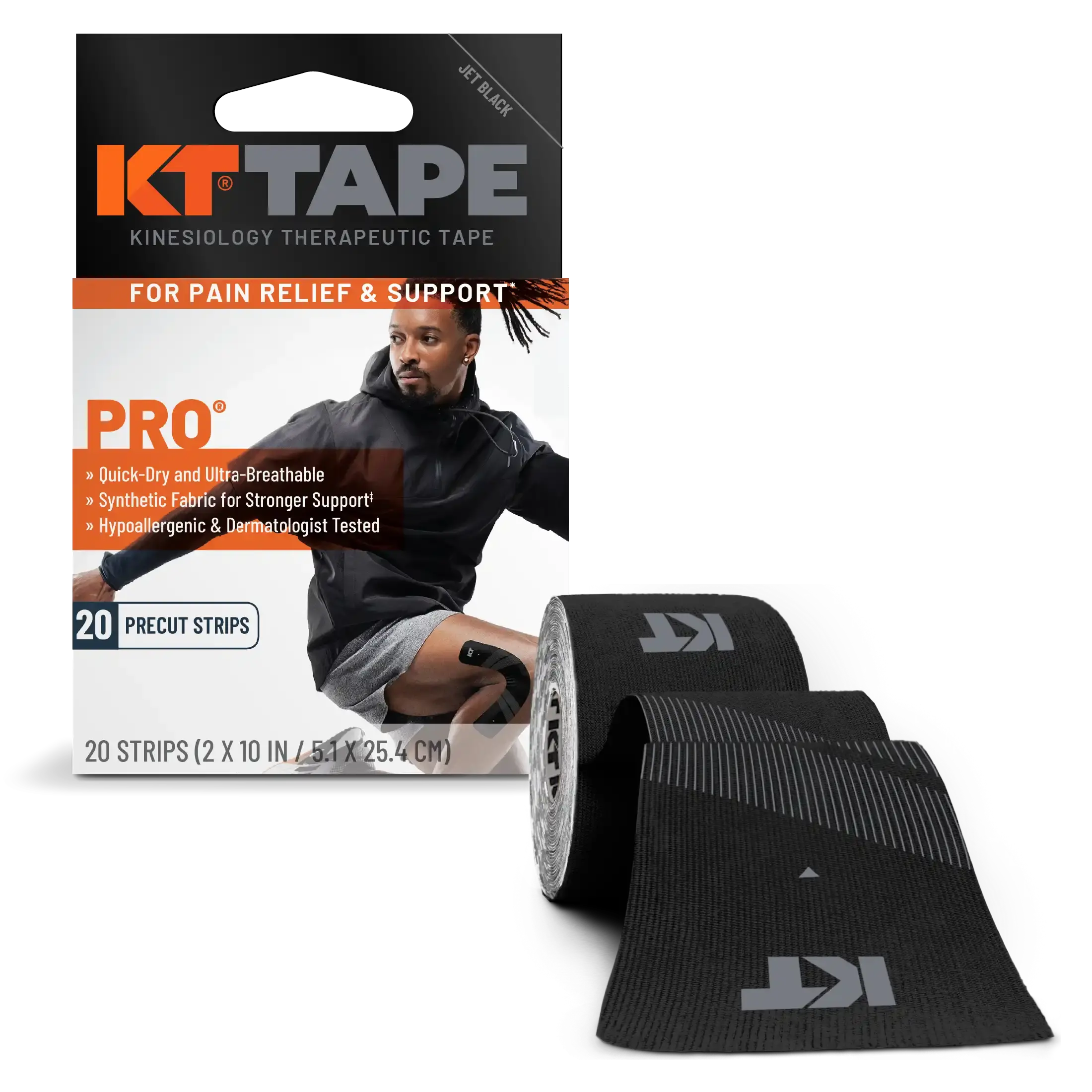
Taping the knee is a skill that can benefit most athletes and can even help with common, everyday use. There are many reasons to assess kinesiology tape use for the knee, such as: taping for medical conditions, to provide stability, or to aid in pain relief. If you’re familiar with the pain associated with PCL and ACL injuries, kinesio tape is another tool or supplement to ongoing knee treatment.
Fact is, knee injuries are common. With wear, tear, and strenuous use, injuries can occur in the knee ligaments, where sprains and dislocations can cause a wide range of performance issues. Two of the areas that see the most damage are the posterior cruciate ligament (PCL) and the anterior cruciate ligament (ACL). Both of these can lead to mobility problems and severe discomfort.
If you’ve experienced an injury in these ligaments, using kinesiology tape can help in the healing process by addressing functionality support while easing discomfort. Knee taping techniques for ACL and PCL can make a world of difference.
*If you have any specific medical conditions, it’s best to consult with your doctor.
Find a Full Line of KT Tape Products that Address Knee Pain here >
Posterior Cruciate Ligament: Common Issues
The posterior cruciate ligament – or commonly known as the PCL – connects your lower leg to your upper leg. It runs along the back of your knee, keeping your thigh and lower leg bones in place and helping your knee move smoothly and comfortably. A tear or strain of this ligament is considered a PCL injury.
PCL injuries can cause mild to severe damage, and healthcare providers tend to rate the injuries using four grades:
- Grade I Injuries: Include a partial tear to the ligament
- Grade II Injuries: Include a partial tear and a loose-feeling ligament
- Grade III Injuries: The ligament is completely torn, and the knee feels unstable
- Grade IV Injuries: Involve an injured PCL and another damaged knee ligament
PCL injuries can happen to anyone, but they are most common in athletes who play football, soccer, and baseball. They also occur in skiers. PCL injuries often happen together with severe knee trauma. For instance, they can happen if you:
- Bend your knee too far backward
- Land incorrectly after a jump
- Fall on a bent knee
- Experience a hit to the front of the knee
Knee pain is also very prominent if you’ve ever hyperextended your knee. This happens when the knee joints bend the wrong way. It commonly occurs in athletes who play high-impact sports such as gymnastics, basketball and soccer. Hyperextension in the knee can cause damage to both the ACL and PCL ligaments. You may have also experienced this pain from a bad landing from a jump or a bad fall.
Some of the symptoms you can experience with a PCL injury include the following:
- Trouble walking
- Pain that worsens over time
- Trouble walking down the stairs
- Stiffness
- Knee instability
- Swelling
The severity of the injury will dictate the best treatment options. One method that offers support and can improve the healing process is taping for PCL injury types.

Taping for PCL Injury
Using kinesiology tape can possibly aid in the healing process because it helps to reduce swelling, allowing better blood flow to the area. According to academic hypotheses, KT tape works by lifting the skin slightly away from the injured tissues, creating space between them and offering less resistance to the fluid removal process that your venous and lymphatic systems provide.
The space that the kinesiology tape creates may also help reduce joints rubbing together while offering support. You can feel more stability when you use KT tape for a PCL injury.
If you find yourself searching “how to tape knee for support following a PCL injury” you want to begin by choosing an “I” strip of tape and tearing the backing paper from the center. Stretch the tape to between 75% and 100% of its length and apply the center of the tape to just below your knee while you bend it and attach both ends without any stretch.
This is a ligament attachment. You can add more tape parallel to this one for more stability.
Anterior Cruciate Ligament: Common Injuries
Your ACL is another of your knee’s ligaments. It connects your femur, or thigh bone, to your tibia or shin bone. Together with your PCL, the ACL forms an X inside your knee, with the latter being closer to the front of the knee. The ACL prevents your knee from rotating or bending too much.
Grade I ACL injuries are those that stretch your ACL enough to damage it but not so much that it can’t hold your knee bones together. Grade II injuries occur when your ACL has stretched enough to partially tear, while grade III injuries refer to a complete tear.
Anything that puts too much force on your knee can tear the ACL, but some of the most common causes are sports injuries, falls, and car accidents. The symptoms you can experience include:
- Knee weakness
- Stiffness
- Pain
- Hearing or feeling a pop in your knee
- Swelling
ACL Taping Knee Options
Kinesiology tape can also be helpful for treating a torn ACL. ACL taping knee options usually require that you bend your knee slightly. You can then apply the center of the “I” tape to the tuberosity of the tibia, which is the spot right beneath your knee. Do this without stretching the tape. Then, you can bring the knee to extension and press the tape from the tibia to the dorsal area.

How to Tape Knee for Support
Unlock optimal knee support with the application of kinesiology tape, a game-changer in the realm of sports-performance and even everyday use. Designed to mimic the elasticity of human skin, kinesiology tape is an innovative solution for promoting stability and alleviating discomfort in the knee area. Learn more about knee pain kinesiology taping here.
Applying kinesiology tape to the knee involves careful precision, ensuring it adheres seamlessly to the skin while allowing for a full range of motion. This therapeutic tape not only provides structural support to the knee but also aids in enhancing blood circulation and reducing inflammation. Whether you're an athlete seeking injury prevention or someone recovering from a knee ailment, harness the power of kinesiology tape to experience targeted support and expedited healing.
How to Strap a Knee Ligament: Using the Right Techniques and the Right Tape
When looking for how to strap a knee ligament, it’s important that you have the highest quality kinesiology tape on hand and understand how to use the most appropriate taping techniques. KT tape helps to promote healing and reduce discomfort, making it a valuable treatment option.
For more How To knee support guides, watch our knee taping for stability and support videos here.

Written by KT Tape Team
The KT Tape Team is a collective of passionate experts in kinesiology, sports medicine, athletic training, and fitness innovation. United by a mission to empower movement and recovery, the team brings together decades of experience working with athletes—from elite professionals to weekend warriors—across a wide range of sports and activity levels. Through rigorous research, collaboration with healthcare professionals, and feedback from real users, KT Tape has developed a line of products trusted around the world for pain relief, support for injuries, athletic recovery, and empowering movement. Whether it's developing application guides, supporting major sporting events, or advancing the science of movement, the KT Tape Team is committed to helping people stay active, recover effectively, and perform at their best. KT Tape isn’t just a product—it’s a movement, and the team behind it is here to support yours.