The phrase, “Throwing like a girl,” has become an incredible compliment. When you step into the batter’s box in a college women’s fastpitch softball game, pitchers will be slinging the ball from 67-71 mph. Not impressed? With the pitcher being about 17.5 feet closer to the catcher than they are in Major League Baseball, that speed is the equivalent of a 99 mph fastball. We are talking speeds that only a couple of MLB pitchers, like Nolan Ryan, have ever attained.
When it comes to the softball fastpitch, there are three primary phases to the entire motion. According to pitchsoftball.com, a website for coaches working with beginning to advanced pitchers, these phases include:
1.The Drive off the pitching rubber: Similar to a sprinter coming off the starting blocks, it is the speed of a pitcher’s drive off he rubber that lays the groundwork for a fast pitch.
2. The “Reachback” through the downswing: it is common for a pitcher to actually tilt her upper body backwards and reach back toward second base to get a larger, better, “whip” of her arm down through the release of the pitch. Finishing tall with good pushback resistance
3. Finish tall with good pushback resistance: The same resistance that a hitter gets from her front leg at the point of contact, a pitcher needs to “set up a wall” and use her stride leg as the resistance for the final downswing into the release of a pitch.
Just like anything else, learning to throw a fastpitch softball can be an opportunity for new injuries. The experts at pitchsoftball.com also give some great tips on how to avoid injury. Find out how to avoid injury here. With potential habits leading to season-ending or career ending injuries, it is important to pay attention to the details of how to pitch correctly.
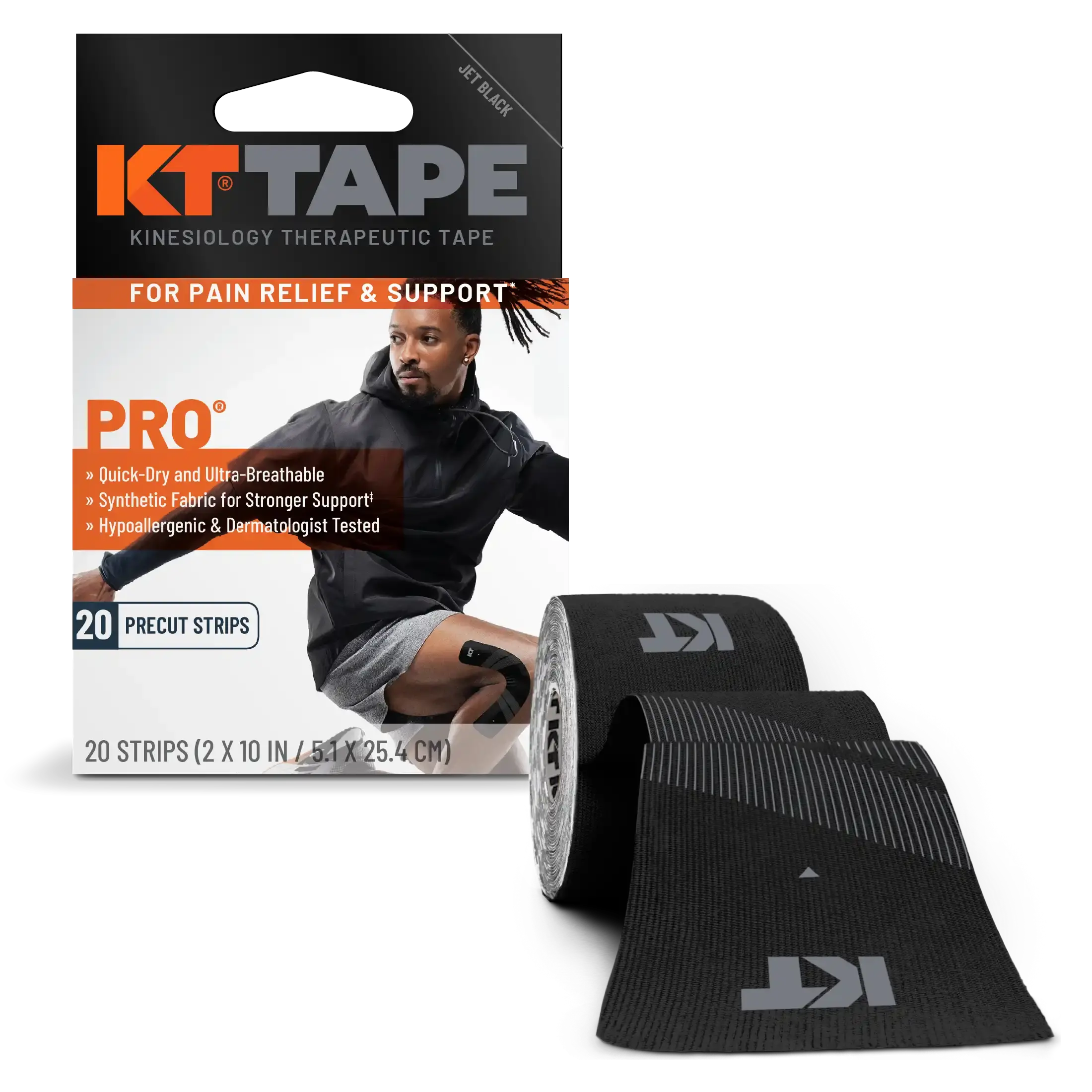
KT Tape is an easy alternative for those nagging shoulder injuries or overworked muscles. Taping an pitching-specific injury is a drug-free alternative for instant pain relief. With players learning how to push their bodies farther at a younger age, it is important to pay attention to the proper techniques outlined by coaches and experts, but also keep KT Tape handy.
Filed under: Shoulder Pain | May 12, 2010| Instructions | Instructions | Instructions | Instructions | Instructions | Instructions |
| IT Band Hip Calf Shin Splints Posterior Shin Splints Quad Groin Hip Flexor Hamstrings |
Gluteus Outer Knee Inner Knee Full Knee Support Bicep Osgood Schlatter Back of Knee Tricep |
Achilles Tendonitis Ankle Stability Plantar Fasciitis Peroneal Tendonitis Ball of Foot Top of Foot Heel Bunion |
Turf Toe SI Joint Low Back Middle Back Ribs Spine Abdominals Neck and Shoulder |
General Shoulder Rotator Cuff AC Joint Shoulder Stability Wrist General Elbow Tennis Elbow Golfers Elbow |
Finger Jam Thumb |
2011 - LUMOS INC. ALL RIGHTS RESERVED. SITE BY MakeItYourWeb
Information on this site is provided for informational purposes only. It is not meant to substitute for the advice provided by a physician or medical professional. If itchiness, irritation, redness, numbness, tingling or new pain appears after applying the tape, remove immediately. Do not use KT Tape if you have been diagnosed with cancer as it may interfere with treatment and disease management strategies employed by your medical professionals. Do not use KT Tape on abdominal applications if pregnant.
You should not use the information contained herein for diagnosing or treating a health problem, injury or disease. You should carefully read all product packaging. If you have or suspect that you have a medical problem, promptly contact your health care provider. Customer reviews and testimonials are provided for informational purposes only. Customer reviews reflect the individual reviewers results and experiences only and are not verified or endorsed by Lumos, Inc. Actual results may vary among users. Please see our Terms of Service Agreement and Privacy Policy.