Few things can mess with your day like nagging shoulder pain. It creeps in while you’re working on your laptop, shows up mid-workout when you’re finally in the zone, and somehow even makes Netflix time uncomfortable. For many of us, the real culprit isn’t an injury you remember getting — it’s years of hunching, overreaching, and letting posture slip one bad habit at a time.
That’s where kinesiology tape comes in. This flexible, skin-friendly tape does more than just look sporty; it helps lift the skin to reduce pressure, support efforts to improve alignment, and gently remind your muscles how to move properly again. If you’re an athlete chasing better performance, an office worker battling desk posture, or someone recovering from shoulder bursitis or impingement, kinesiology tape can help restore balance and keep you moving with less pain.
In this guide, we’ll break down how kinesiology tape works, why it’s such a game-changer for shoulder pain and posture, and how you can apply it at home like a pro. By the end, you’ll understand how a few simple strips of tape can make a world of difference in how you move, feel, and perform.
Understanding Shoulder Pain and Posture
Your shoulders are marvels of mobility. They allow you to reach overhead, swing a tennis racket, or carry groceries. But that freedom of movement comes at a cost. The shoulder joint relies on a delicate balance of muscles and ligaments to stay stable. When one part of that system weakens or tightens, the entire structure can become imbalanced.
Common culprits of shoulder pain include:
-
Poor posture: Spending long hours rounded over a desk or phone causes the shoulders to roll forward, placing strain on the muscles around the neck and shoulder blade.
-
Overuse or repetitive strain: Weightlifting, swimming, or even daily tasks like carrying bags can lead to irritation and inflammation over time.
-
Injury or instability: Conditions such as frozen shoulder, shoulder bursitis, or shoulder impingement often start with small imbalances that worsen when left untreated.
The result? Tightness across the upper back and neck and shoulder blade, restricted motion, and pain that lingers. When the shoulder is out of alignment, nearby muscles overcompensate, reducing shoulder stability and slowing your recovery.

How Kinesiology Tape Works for Shoulder Pain
If you’ve ever wondered how kinesiology tape works for shoulder pain, think of it as a supportive guide rather than a restrictive brace. The tape’s elasticity gently lifts the skin, creating tiny spaces that allow better blood flow and lymphatic drainage*. This improved circulation can help reduce inflammation & swelling locally, as well as pain from muscle fatigue, which are all common contributors to pain.
The tape also stimulates sensory receptors under the skin, reminding your muscles to move correctly. By doing so, it helps restore natural movement patterns and reinforces proper posture. It’s a little like having a physiotherapist’s touch with you throughout the day.
But does kinesiology tape actually help with posture correction? Research and clinical trials have shown promising results. In fact, studies such as the Efficacy of Kinesiology Taping report improvements in muscle function, posture, and pain management among participants who used kinesiology tape as part of their rehabilitation or training.
When applied correctly, kinesiology tape can:
-
Support strained or overworked muscles
-
Reduce tension and fatigue-driven pain
-
Encourage correct joint alignment
-
Enhance body awareness, helping you notice when your posture starts to slip
Essentially, it allows you to stay more active while supporting your recovery — a win-win for anyone who doesn’t want pain to pause their routine completely.
Benefits of Using Kinesiology Tape for Shoulder Pain Relief
Here’s what makes kinesiology tape such a game-changer for people struggling with shoulder discomfort:
Pain reduction without limiting movement
Traditional braces can restrict mobility. Kinesiology tape, on the other hand, allows full range of motion while providing subtle support. It’s perfect for gym-goers, runners, or office workers who need flexibility without flare-ups.
Improved posture awareness
Because the tape tugs slightly when you slouch or roll your shoulders forward, it naturally reminds you to correct your position. Over time, this feedback can retrain your muscles for better alignment.
Faster recovery from pain
The lifting effect on the skin helps reduce pressure on pain receptors, promoting local circulation that helps flush out excess fluid and inflammation.
Supporting your performance and joint stability
For athletes, taping can support weak or fatigued muscles, improving shoulder stability and pain relief during training or competition.
Drug-free and safe for daily use
Unlike pain medication, kinesiology tape doesn’t rely on chemicals — it simply improves your body’s natural healing mechanisms, focusing on exactly the area you need support.
How to Apply Kinesiology Tape for Shoulder Pain
Before you grab your tape roll, it’s important to learn how to apply kinesiology tape for shoulder pain correctly. Applying it with too much tension or in the wrong direction can reduce its effectiveness or even irritate the skin.
Here’s a quick step-by-step overview:
Step 1: Prepare the skin
Clean and dry your shoulder area to ensure the tape adheres properly. Avoid applying lotions or oils beforehand as they will interfere with the adhesive.
Step 2: Use pre-cut tape strips, or cut and round the tape edges
Rounded edges prevent peeling during movement or showering. KT makes this easy with our pre-cut strips for speedy and simple application.
Step 3: Apply the anchor
Start by placing one end of the tape near the upper arm without any stretch in the 1st 2 inches of tape.
Step 4: Position for your specific issue
Depending on your condition, you’ll adjust the direction and tension:
-
Shoulder instability: Apply the tape from the upper arm across the shoulder toward the upper back to reinforce joint stability.
-
Shoulder impingement: Tape diagonally from the front of the shoulder to the upper arm to unload pressure on inflamed tendons.
-
Upper back and posture support: Create an “X” pattern across the upper back and shoulder blades to cue upright posture.
-
End the application with the final 2 inches of tape on the skin, without any stretch, as your 2nd ‘anchor point’ to ensure the tape stays comfortably in place.
Step 5: Smooth and activate
Rub the tape gently to activate the adhesive securely on your skin. Move your arm through its range of motion to ensure comfort.
If you’d like visual guidance, KT Tape’s official tutorials provide clear, step-by-step videos that demonstrate proper application techniques for every shoulder issue imaginable.
For those dealing with stubborn tension points, check out this helpful guide to easing muscle knots, which is a great complement to shoulder taping for full-body balance.
How Long Can You Wear Kinesiology Tape?
Typically, you can keep kinesiology tape on for 3 to 5 days. It’s water-resistant, so you can shower, swim, or work out without worry. Just pat it dry instead of rubbing, and avoid using a hair dryer which may affect the adhesive.
If your skin starts to itch, feel irritated, or if the tape begins peeling off at the edges, gently remove it by holding the skin and rolling the tape back over itself — never pull straight up as this can cause skin irritation.

Is Kinesiology Tape Safe for Sensitive Skin or Long-Term Use?
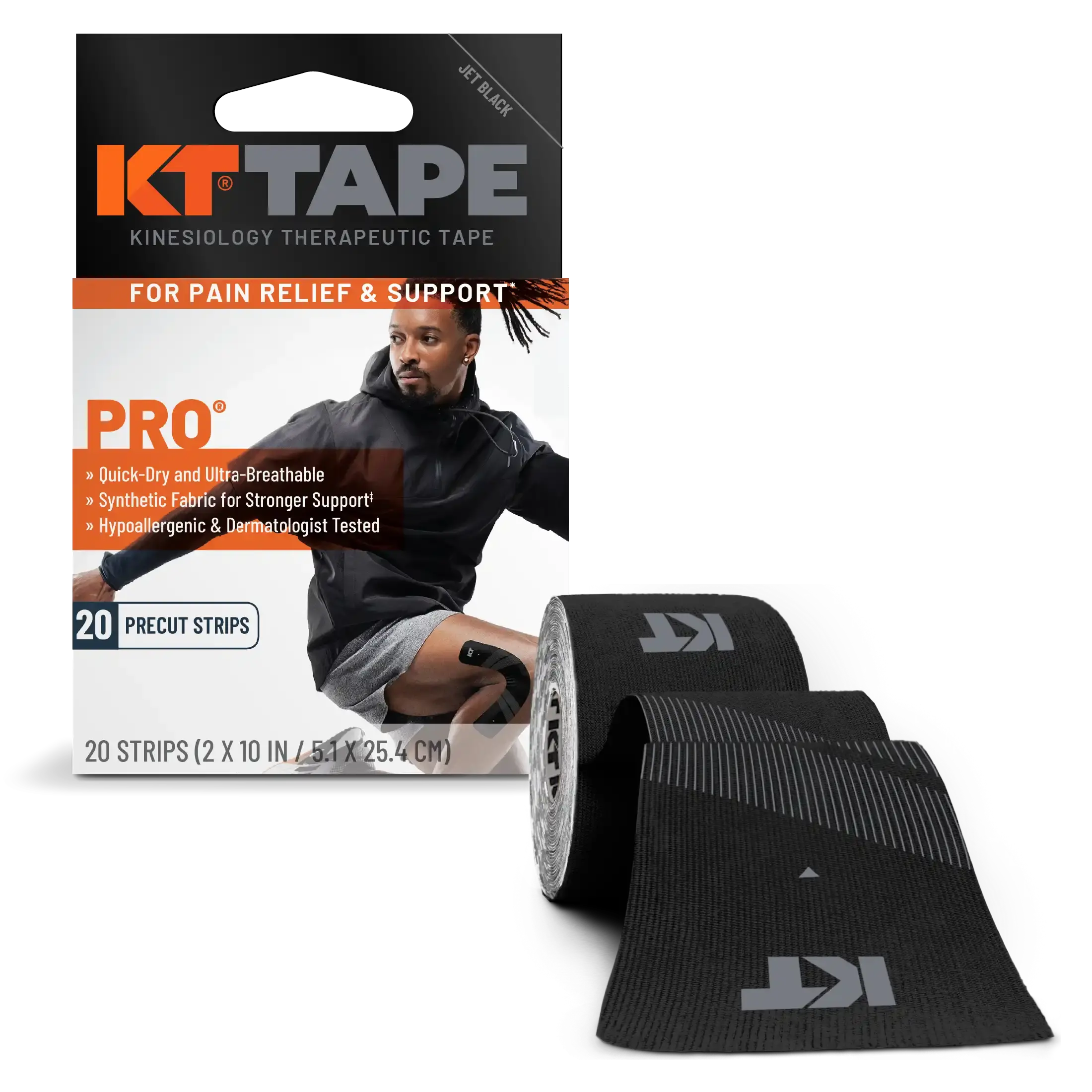
High-quality kinesiology tapes, like KT Tape, are designed with comfort in mind. They’re made from breathable, latex-free cotton or synthetic fibers and skin-friendly adhesives that are hypoallergenic and suitable for most skin types.
Still, if you have sensitive skin, do a patch test first on a small area and/or try KT Tape Sensitive Skin which is designed with a more gentle adhesive for easier removal. And while kinesiology tape can be worn regularly, it’s good practice to give your skin a break between applications.
If you notice any persistent redness or irritation, consult a dermatologist or physiotherapist before continuing.
Choosing the Best Kinesiology Tape for Shoulder Pain
All kinesiology tapes may look similar, but not all are created equal. When it comes to shoulder pain relief, quality makes a world of difference.
The best kinesiology tape for shoulder pain should offer:
-
Strong yet flexible stretch: to move naturally with your muscles.
-
Durability: so it stays on through sweat, showers, and workouts.
-
Gentle adhesion: to protect your skin while providing reliable support.
-
Hypoallergenic materials: perfect for long wear, even for sensitive users.
KT Tape checks all these boxes and more. Its advanced elastic core provides consistent support without restricting movement, and its moisture-resistant design means you can wear it through intense training sessions or long workdays comfortably.
It’s no wonder athletes, physical therapists, and weekend warriors alike call KT Tape the gold standard for kinesiology taping.
How Do You Know If You’re Using the Right Taping Technique?
Here’s a simple check: if your shoulder feels supported but still moves freely, you’re on the right track. You shouldn’t feel pinching, pulling, or numbness. The tape should never restrict circulation or cause discomfort.
If your symptoms persist despite proper taping, or if your pain worsens, it’s time to re-evaluate your method or see a professional. Watching KT Tape’s tutorial videos and following our shoulder stability and pain relief guide can help ensure you’re taping correctly.
When to Seek Professional Help
While kinesiology tape can offer tremendous relief, it’s not a cure-all. Persistent or severe shoulder pain might indicate an underlying condition that needs medical attention. If your discomfort lasts longer than a few weeks or limits your range of motion, consult a physiotherapist or sports medicine specialist.
They can assess your posture, muscle imbalances, and taping technique to tailor a comprehensive treatment plan that includes stretching, strengthening, and manual therapy.
Give Your Shoulders the Support They Deserve
Shoulder pain doesn’t have to control your daily routine. Kinesiology tape is a simple yet powerful ally that supports posture correction, improves stability, and helps your recovery journey with less pain. It’s supportive without being restrictive, helping your body move naturally and comfortably.
KT Tape helps you move freely and confidently again — ideal for athletes chasing performance and office workers striving for better posture. With its proven design, durability, and expert-backed guidance, it’s the trusted choice for anyone seeking kinesiology tape for shoulder pain relief.
Your shoulders carry a lot — responsibility, stress, and sometimes literal weight. Give them the support they deserve with KT Tape and feel the difference it makes.

Written by KT Tape Team
The KT Tape Team is a collective of passionate experts in kinesiology, sports medicine, athletic training, and fitness innovation. United by a mission to empower movement and recovery, the team brings together decades of experience working with athletes—from elite professionals to weekend warriors—across a wide range of sports and activity levels. Through rigorous research, collaboration with healthcare professionals, and feedback from real users, KT Tape has developed a line of products trusted around the world for pain relief, support for injuries, athletic recovery, and empowering movement. Whether it's developing application guides, supporting major sporting events, or advancing the science of movement, the KT Tape Team is committed to helping people stay active, recover effectively, and perform at their best. KT Tape isn’t just a product—it’s a movement, and the team behind it is here to support yours.